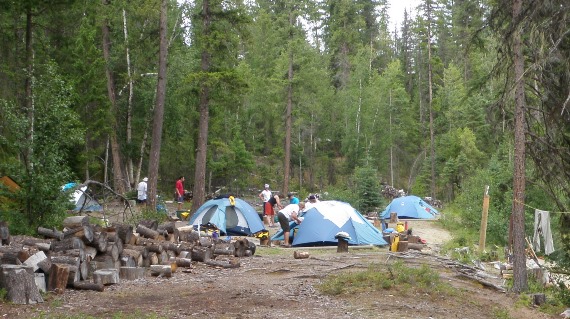
A Bowron Lake campsite
Wilderness camping on the Bowron Lake Canoe Circuit

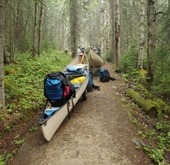
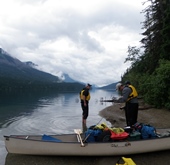
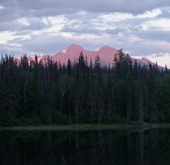
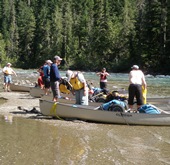
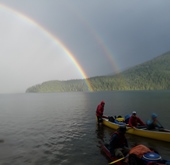
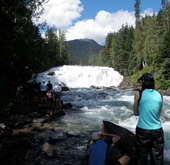
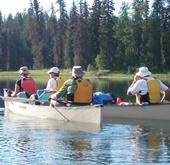
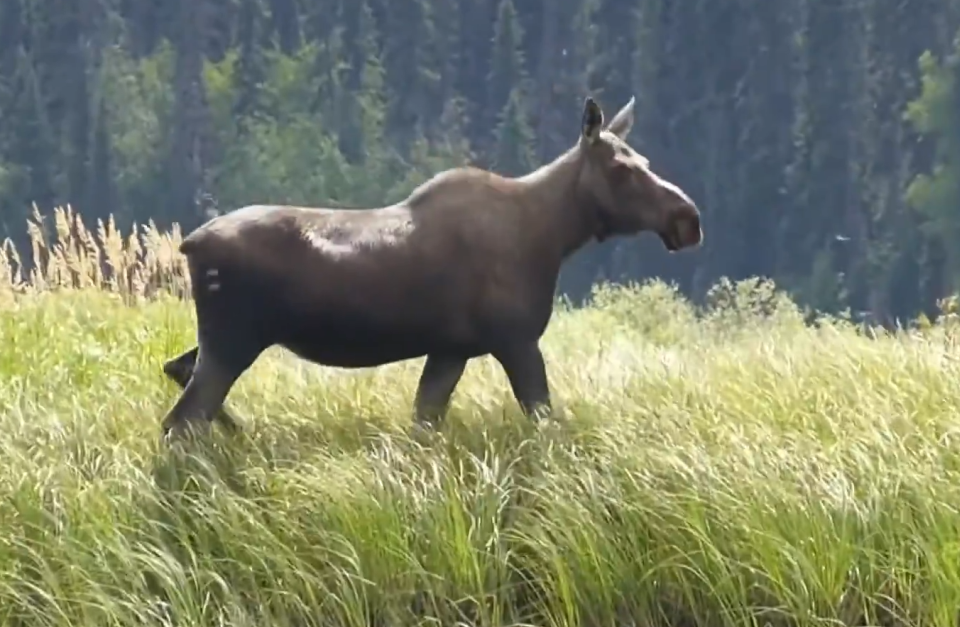
The Bowron Lakes are a renowned canoe circuit located in the Cariboo Mountains of British Columbia, Canada. This picturesque chain of lakes forms a unique canoe circuit that spans approximately 116 kilometers (72 miles). It is celebrated for its stunning natural beauty, offering paddlers the chance to experience tranquil waters, lush forests, and striking mountain scenery. The circuit encompasses a series of lakes and portages that take adventurers through a variety of landscapes, including dense woodland areas, wetlands, and open lake vistas. Wildlife is abundant in the area, with opportunities to see moose, bears, and a variety of bird species. The Bowron Lakes are a popular destination for both novice and experienced canoeists seeking a wilderness adventure, offering a blend of physical challenge and the tranquility of nature.
Sea to Sky Expeditions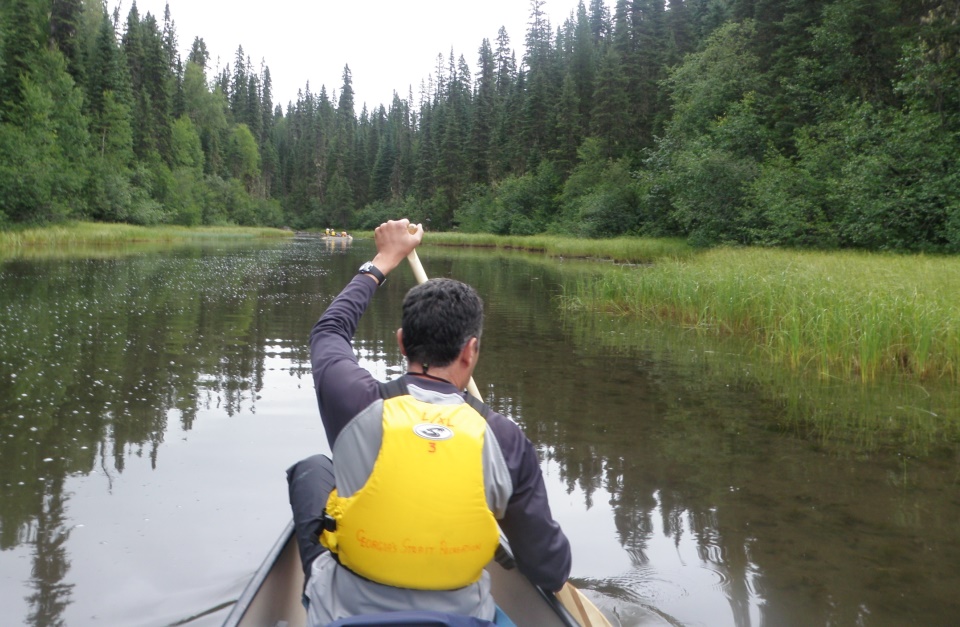
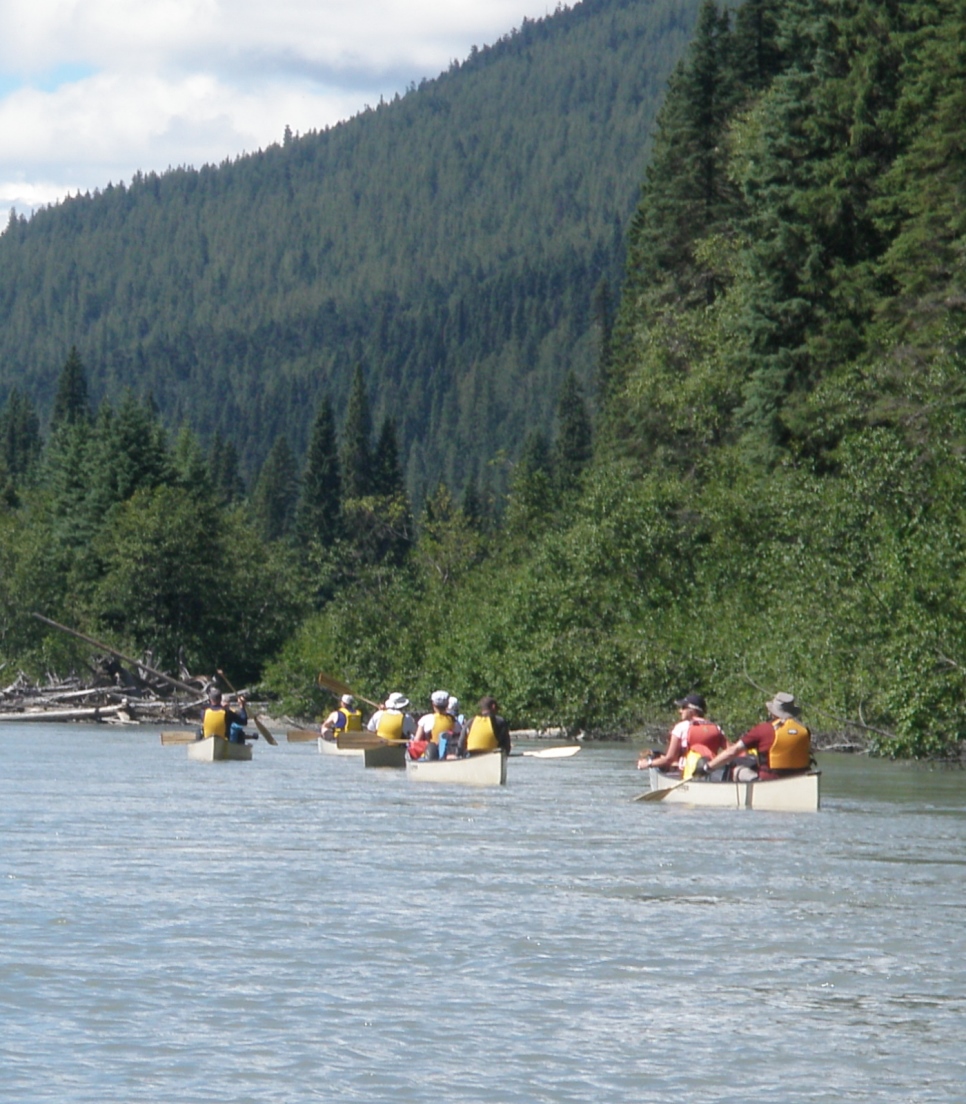

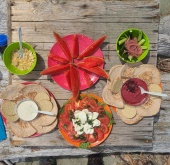
35+ years of leading expeditions. Nutritious and delicious foods are our specialty. Our guides go beyond leading and transport you to a new place. We can pick you up in Williams Lake or Quesnel the day before departure. The first night's accommodation before departure is included. See details below.
The Bowron was home to First Nations for thousands of years. First Nations presence in the Bowron ended near the end of the 19thcentury, in the 1860's.
The Carrier are an Athabaskan speaking First Nation centred in the upper branches of the Fraser River between the Coast Mountains and the Rocky Mountains in what is now central British Columbia. Most commonly this First Nation was and is still known as Carrier, at one time called Takuli, but today increasingly referred to as Dakelh. The First Nation that historically lived and travelled in the Bowron Lake area was the Dakelh.
Archaeological sites excavated in the territory occupied by the Dakelh, specifically at Punchaw, date back at least 4000 years; some archaeological evidence suggests longer. The Dakelh were semi-sedentary, moving seasonally between villages and hunting and fishing camps. The Carrier people lived during the winter in semi-subterranean pit houses and in warmer weather in temporary dwellings (hogans) made of wooden poles and branches.
No doubt First Nations had a name for this lake and place, but this has been lost to time. Bowron Lake was originally known as Bear Lake, possibly named by fur traders travelling on the Fraser River near present-day Quesnel. The traders had been told about a lake to the north and east, where First Nations lived, fur traders had a habit of giving the name 'Bear Lake' to at least one local lake. In 1914, the name was changed to Bowron Lake, in recognition of John Bowron, a Barkerville pioneer, Post Master, Gold Commissioner, Fire Commissioner, Librarian, Constable, and Mining Recorder to name some of his titles. There are people alive today that still refer to the Bowron as Bear Lake.
Information courtesy of Jeff Dinsdale https://celebratethebowron.com/2019/11/12/the-bowron-a-short-history-presentation/
Wilderness camping on the Bowron Lake Canoe Circuit
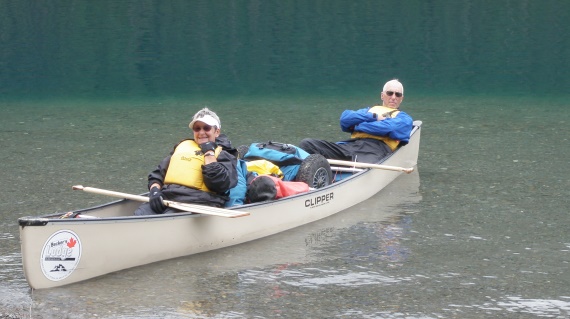
The serene beauty is refreshing
For the first night, we will be in cabins or a resort campground. This sometimes changes in a season or between seasons depending on availability. We either stay at Bear River Mercantile or at Becker's Lodge.
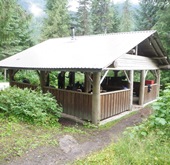
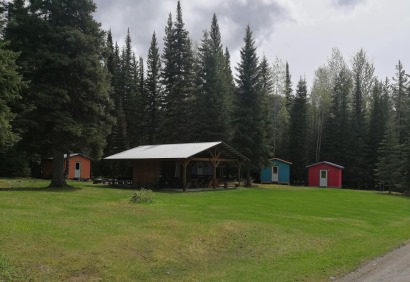
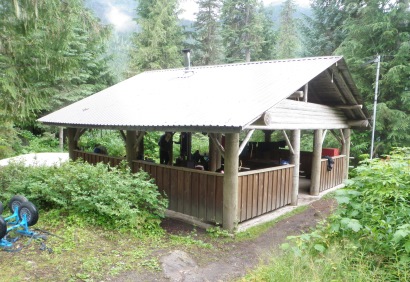
During our canoeing trip, we stay in the pre-booked group campsites almost every night. These sites are very rarely shared with others (a small number of them are located at the same place as a small group site). These camps have a cooking shelter and tent pads to minimize impact on the environment due to the number of annual visitors.
You don't need to have paddled before. Experience helps, but we will show you everything you need along the way. Our guides will assist you and teach you basic paddling skills.
In Canada, where are there NOT bugs? Fortunately, we are not deep in the forest or muskeg, where the mosquitoes and/or blackflies cover you like a blanket. Typically, if there is a breeze, there are no bugs. If it is calm, there are bugs. In alpine areas, bugs are not a problem. In sub-alpine areas, they get progressively more bothersome the lower in elevation you go. That said, there are relatively few mosquitos and no-seeums, but some. It is helpful to have a bug net for your head and some bug spray with you.
There is never an intention for you to flip and get soaked, but sometimes it happens. We provide you with dry bags for your clothing and gear. We also show you how to properly use them to make sure your things stay dry.
Tips, or gratuities, are not mandatory. However, please consider what service is actually being given to you. While you might think that the company should just pay the guides better, it is not so simple. We do work in a competitive market, and pay rates are a function of the trip prices. If we could double prices, we would pay guides significantly better. At Sea to Sky, we have some of the better pay rates in the industry, and we are always pushing our competitors to increase pay rates for guides, but there is only so much we can do. Guides are seasonal workers. They shift off of their summer season to winter activities, or fill in with retail work, which is usually little more than minimum wage, often to periods of no work between seasonal jobs. It is a hard job, and wearing on the body.
So, how much should you tip your guides?
If you ate every meal out in a day, at a good, but low-cost restaurant, you would probably tip between $10 and $15 per day. If you were travelling and visiting a city and ate all your meals out, this is about how much you would tip for the day. Please consider this when deciding on the tip you will give to your guides.
On average, guides usually receive about $75 to $125 from each guest for each guide.
Early dates are not confirmed through BC Parks until Parks opens up the backcountry reservation system for reservations. Trip date are usually confirmed by early November. For 2025, BC Parks will open the reservation system sometime after the October 19th Provincial Election.
| Departure Dates Confirmed Dates | Trip Status Trip Status | Price CAD (PP) Excluding Tax | Price CAD (PP) Including Fees & Tax | |
|---|---|---|---|---|
June 12-21, 2025 |
Available |
$2,825 |
$3,055.24 |
|
June 26-July 5, 2025 |
Available |
$2,825 |
$3,055.24 |
|
July 11-20, 2025 |
Not Available |
$2,825 |
$3,055.24 |
|
July 27-August 5, 2025 |
Available |
$2,825 |
$3,055.24 |
|
August 10-19, 2025 |
Available |
$2,825 |
$3,055.24 |
|
August 26-September 4, 2025 |
Available |
$2,825 |
$3,055.24 |
|
September 9-18, 2025 |
Available |
$2,825 |
$3,055.24 |
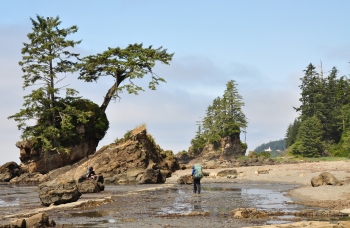
The West Coast Trail is one of the most popular hiking trails in the world. It is a rugged coastal hike along the Pacific coast of Vancouver Island, Canada.
explore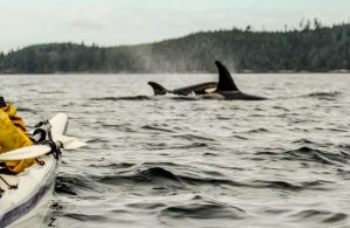
Johnstone Straight is between Vancouver Island and the mainland, abounding with an abundance of marine life, and unique First Nations history.
explore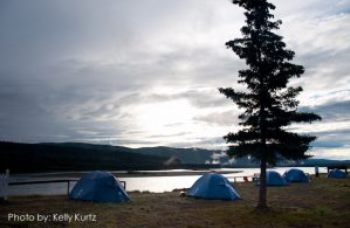
The Yukon River is one of the historical routes that the Yukon Gold Rush followed, travelling to the gold fields in the territory.
exploreA wilderness adventure offers many rewards. It is an opportunity to get away from routine, be awed by incredible scenery, learn about the natural and cultural history of an area, meet new people, and maybe find out something new about yourself. Be reminded of the words of Henry David Thoreau, who said, "I went to the woods because I wished to live deliberately, to front only the essentials facts of life, and to see if I could not learn what it had to teach, and not, when I came to die, discovered I had not lived." Our goal is to provide a safe wilderness experience which meets your expectations and stirs within you the same love, caring, and passion for nature and the great outdoors that our guides possess. I know that you will make some new friends along the way and take wonderful memories home. Come and join us for a great holiday. If history is any measure, you'll return to do another trip with us in the future.
Sea to Sky Expeditions began in 1988 with Len Webster leading people on the West Coast Trail on Vancouver Island. Len quickly expanded with hiking, canoeing and kayaking trips throughout BC and the Yukon. He eventually sold Sea to Sky and moved into a different role in the industry. We carry on the tradition of exceptional tours on water and land. The current directors, having guided for Sea to Sky, and worked closely together since the mid-1990s, are proud to carry on this tradition and join the wonderful Sea to Sky destinations with Coastal Bliss Adventures.
Searching Availability...
For any wilderness adventure, "layering" is one of the most critical concepts.
Layering clothing can have several advantages:
Temperature regulation: Layering allows you to adjust your level of warmth by adding or removing layers as needed. This can be especially useful in unpredictable weather or in environments with fluctuating temperatures.
Comfort: Layering can help you stay comfortable in a range of temperatures and activities. For example, if you're going for a hike, you can wear a base layer to wick sweat away from your skin, a mid layer for insulation, and a outer layer to protect against wind and rain.
Versatility: Layering allows you to mix and match different pieces of clothing to create different looks and adapt to different situations.
Style: Layering can add depth and interest to your outfit, allowing you to express your personal style and create a polished look.
Protection: Layering can also provide protection against the elements, such as wind, rain, and cold temperatures.